Agreed. This is partially why I haven’t actually jumped ship myself and really waiting it out.
Cause Linux Phones just really are not there yet and while Android seems to be going very downhill right now the fact of the matter is for now it is fine. For now it is still good.
Linux Phones either have extremely low accessibility currently being required on very specific devices with very specific confusing steps or having a massive price tag for a preloaded ones. Though some actually have a pretty decent price to performance ratio to be fair.
But then even if you get past that from what I’ve seen the optimization on them still leaves… A lot… To be desired.
I do think they can become much better (at least I hope) but right now they are very hard to transition to as of right now to say the least.
Earlier years we just connect the phone to a pc and use a third party market’s windows app (where we don’t have play store or even manufacturer’s app store)
Why can’t F-Droid just create unique app IDs by adding something like “org.fdroid” to it? So instead of having com.aurora.store it would be org.fdroid.com.aurora.store for the version signed by F-Droid. Then F-Droid could be a “verified developer”* publishing all the thousands of apps that are currently in the F-Droid repo. This way, also apps where the original developer doesn’t want to be verified with Google can be built by F-Droid and distributed with F-Droid as the verified developer. (Not sure if this can be applied to reproducible builds in the same way.)
Wouldn’t that mean all the F-Droid apps will be installable on “certified” Android devices in the future?
For legacy users who want to update already installed apps from F-Droid there could be a second version of the APK which keeps the old app ID so that the app can be updated. The F-Droid app can decide which version to use - the old app ID for updating already installed apps or the new F-Droid app ID for installing a new app. After a few years, all users would be migrated to the new app IDs this way.
Are there any problems with this idea?
*it would of course mean someone needs to do the verification for F-Droid itself, but I don’t think that’s an unsurmountable problem as (most?) F-Droid developers are not anonymous anyway.
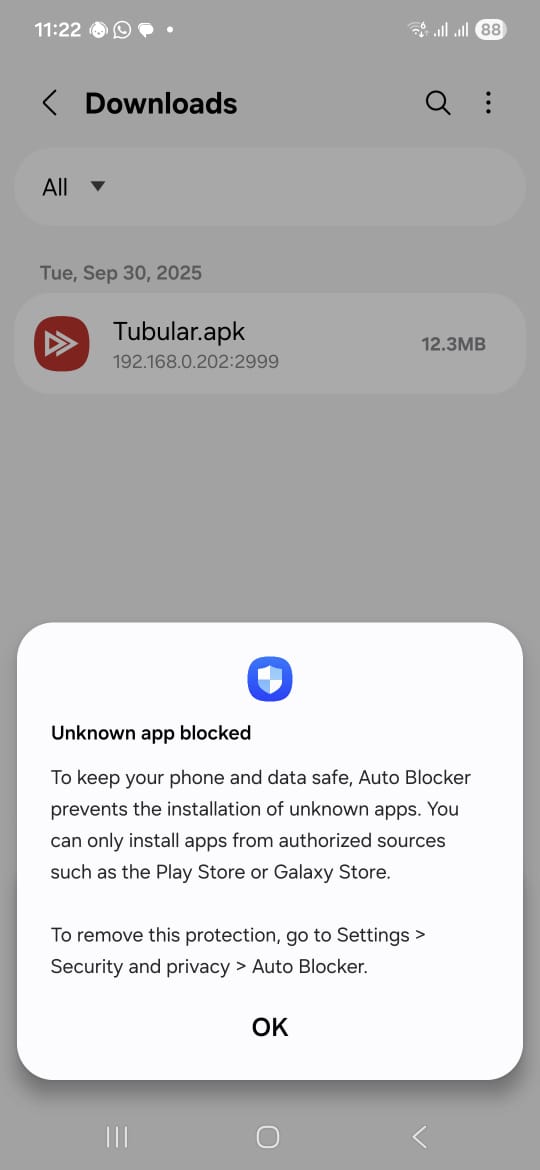
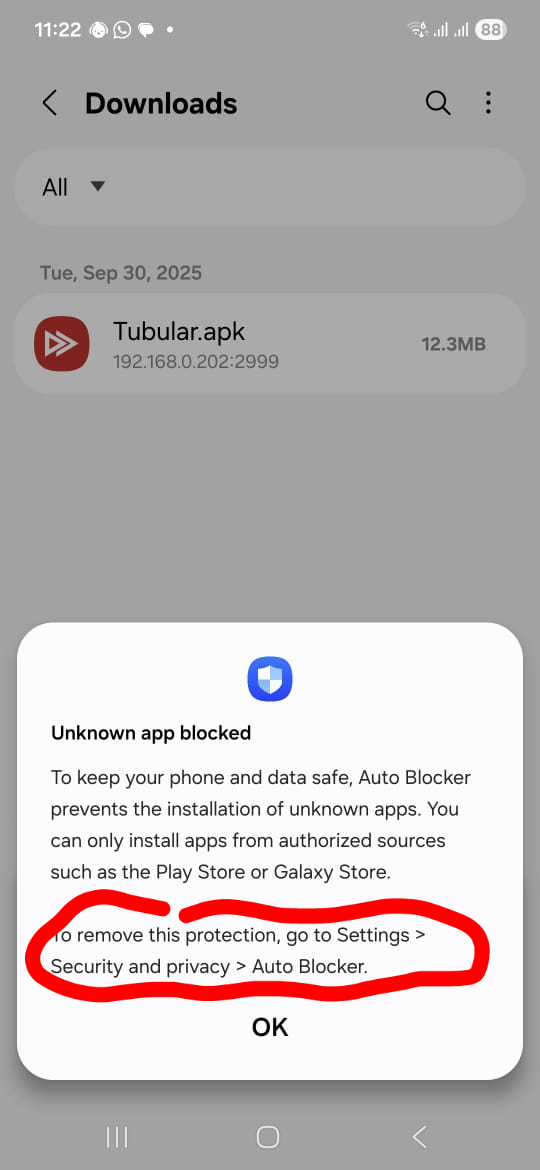
It’s already complicated to install an app that is signed by me on a samsung device.
And on other phones I get the play protect pop up warning me and I have to enter my PIN to install the app.
This should be enough for them.
I already posted something that should finally solve this conundrum, since no nation cares for it’s people very much (Age Verification crap and all that), it’s better to create an Internet focused nation and literally but up barriers to prevent companies and governments from invading our Privacy, plus protect Freedom of Speech & Freedom of Choice. It’s just horrible how far our world has deteriorated over just 29 years of my life…
Participating in developer verification will not affect your experience in Android Studio, the official IDE for Android app development. You will continue to be able to build and run an app even if your identity is not verified. Android Studio is unaffected because deployments performed with adb, which Android Studio uses behind the scenes to push builds to devices, is unaffected. You can continue to develop, debug, and test your app locally by deploying to both emulators and physical devices, just as you do now.
Do I still need to register my apps if I’m only distributing to a limited number of users?
We recommend you register. It’s a simple, one-time process that will allow anyone to download and install your app. However, if you prefer not to, we are also introducing a free developer account type that will allow teachers, students, and hobbyists to distribute apps to a limited number of devices without needing to provide a government ID.
Guides states
How this helps you
A safer, more trusted ecosystem benefits the entire developer community.
Deters bad actors who prefer to operate anonymously.
Makes it harder to spread harm by linking bad apps to their developers. This helps us hold developers accountable, enforce safety policies, and remove malicious networks.
Boosts user confidence, helping you build relationships with new users and establish trust.
Potential for your information being stolen by hackers, or your information being used for illegal surveillance. Plus if your information is stolen, it could be used to commit fraud, and could actually lead a thief to your location, which has its own problems.
I second this. If Google enforces the verification, I don’t see any way around it.
It seems to me that this could have been managed transparently from the end users’ point of view if F-Droid had generated its own app IDs. I don’t understand why this couldn’t have been planned from the outset of the F-Droid project.
My 2 cents on this blog. Mishaal leaves out a lot, always. This so called network connection is calling home to google every single time. Where is the user privacy left? This cache of that app, will make it more problematic, especially by eating up data (whatever it will eat).
Everyone keeps speaking about developers only, as if users do not exist at all. Not every user, rather 90% of the world uses non-rooted stuff. 99% of that 90 do not even know what root is, leave out XDA, F-Droid, APKs etc.
Foogle already throws in 100s of apks in your /sys-app & /system, which already eats up 30-40% of your phone space, adding this will surely require some library, or similar stuff to eat up more.
Whatever foogle is doing makes no sense. They cannot stop so called bad actors themselves, and now they want to put rules on outside world? Their own house is a mess, but they are saying to others, clean up, else I will get angry?